Thursday, April 25, 2019

How many EVMs should the EC check?

How many EVMs should be manually checked (i.e., VVPAT count compared with that of the machine) to have sufficiently high (>99%) confidence in EVMs?
Let's take an assembly election, say in Karnataka, which has around 5crore voters and 224 seats. This means that each constituency has ~2 lakh votes and given the EC recommendation of ~1400 people per booth (urban), around 130 booths per constituency.
Clearly, if we check all the EVMs in a constituency, we'll have 100% confidence in the outcome. But what is the minimum number of EVMs you need to check to be >99% confident?
Is it 50%, as CBN told Rajdeep Sardesai? Is it 90%? Or is it 99%? Well, the answer may surprise you.
But first, let's see how many EVMs need to be tampered in a close election. Let's assume two parties, and a vote split of 51-49. [Typical margins are way higher than this.] So, in our model constituency, this is a difference of 4000 votes. If the tampering party needs to overcome this margin without raising suspicion, the margin must be split across many polling booths. Given that each booth has 1500 votes and that voting percentages are typically around 60%, there are around 900 votes per booth. Let's say that to avoid raising suspicions, the number of tampered votes per booth won't exceed 10-20% of the overall vote (i.e., 100-150 votes). The tampering party therefore needs to tamper at least 4000 / 150 = ~ 27 booths. Which means, out of the 130 EVMs in the constituency, they have to tamper at least 27. So, we have ~80% good EVMs and ~20% bad ones per constituency.
OK, so let's say that we pick 5 machines (as per the SC order) for verification. Even if we find one bad EVM amongst the five, we can countermand the election in the constituency. Therefore, if all the five machines we select turn out to be good, we would have failed to detect the bad EVMs and the tamperers go scot-free. [Remember, there are 20% bad EVMs in the constituency]. What is the probability of this happening? Well, we have five selections to perform. In the first selection, the probability of selecting a good EVM = 0.8. On the second try, because we have removed this EVM, the probability = 0.79, and so on until the probability is 0.76 on the
5th selection. But what is the probability that all our selections are good? It is : 0.8 X 0.79 X 0.78 X 0.77 X 0.76 = ~0.288. So we have a 29% chance that our test will fail and a 71% chance that we'll detect a tampered EVM in a single constituency.
But remember, these tests are being done across the state! Even a single tampered EVM across the state will put the entire election into question. For simplicity let's assume that EVMs were tampered in 10 seats. So, what is the probability that our test will fail? It is 0.29^10, which is 0000042, which means our test will work 99.9995% of the time. And like the opposition if you assume that EVMs have been tampered in each constituency, the probability of our test failing is 0.29^224; a number that is closer to zero than even the mass of some elementary particles! [Of course, I'm making some simplifying assumptions, like the percentage of tampered machines being the same across constituencies.]
So one can see that manually verifying only 5 machines per constituency can give a near 100% confidence in our voting system. This even if we ignore the logistical difficulties and systemic safeguards that would make such large scale tampering near-impossible in the first place! Too bad simple mathematics does not find place in our national media narrative. 

Sunday, August 14, 2016

Kashmir

The news media is full of stories by liberal activists and journalists about a 'political solution' for Kashmir. But what are the contours of such a solution? No one bothers to explain, but everyone hints darkly at some form of freedom for Kashmir and Kashmiris. I'm fortunate enough to know some folks of such leaning, and one of them even lamented that India's presence in Kashmir is as untenable as Britain's in India! Really? Well, let's examine some facts:

- Historically, India was never part of Britain. She was accessed by force and guile. Kashmir on the other hand, is a part of India that fell into dispute because of the act of partition and the naivety of Indian leaders. In fact, the name Kashmir comes from Kashyapa Mira loosely translated as Kashyapa's mountain!

- Britain treated India like a colony. The imperial government killed our industry, our agriculture, and even our people. On the other hand, Kashmir is the most pampered state in the Indian union. Even if we ignore Article 370 (which is actually the reason for Kashmiri youth's despondence), an average Kashmiri gets eight times per-capita greater grants than any other citizen. Unlike every other state which gets 70% of central assistance as debt and 30% as grant, Kashmir gets 90% as grant, and 10% as debt. And unlike Britain, which drained India's resources, the rest of India has actually drained its resources to finance the profligacies of Kashmiri politicians and separatists.

Sane people can now agree that India's presence in Kashmir is nothing like that of Britain's occupation of India. Let's now try to see if there a political solution that works.

It should be clear as daylight to anyone that no prime minister will stand up in Parliament and present the "Independence of Kashmir act". It will not happen even if Prashant Bhushan becomes the prime minister. So, Independence is ruled out. Pakistan will not withdraw from PoK, so plebiscite is ruled out. (For those who came in recently, the 1948 UN resolution on Kashmir dictates three measures to be taken: First, Pakistan withdraws from PoK, second, the two governments restore peace and order in all of J&K and third, India conducts the plebiscite in question, and the three measures are to be taken in sequence.) The only option the Kashmiris have therefore, is to live in peace within the Indian constitution and partake in India's development.

There are three measures Kashmiris can take to get over their plight. First, disavow violence. The Indian government has never known to be gentle or kind towards its citizens, particularly the ones who take up armed revolt against it. Remember how a frail Anna was arrested in the heart of Delhi for his peaceful protest? Then why would we expect the government to take kindly to stone-pelters and saboteurs? I'm not for a minute condoning the government's handling of either protest. But fixing the government is a long-drawn process. And it won't be accomplished by arson. In the meantime, generations of young Kashmiris are forfeiting their right to a better life in chasing the chimera of Independence.

The second measure is to voluntarily abolish Article 370. One thing that is clear from India's development story is that the most open cities and states have created the most job opportunities for the country. Be it Bangalore, NCR, or Mumbai, the successes of these cities (and of course, the accompanying urban decay) is because anyone can stay in these cities, setup businesses and own property. Denying these opportunities to non-Kashmiris only perpetuates the rule of the zamindari class in Kashmir. The people of Kashmir must ask a simple question: Who benefits by the continuance of Article 370? Is it the zamindars, the politicians and the separatists, or is it the common people who have no job opportunities?

Finally, the youth must take a hard look at the supposed leaders of this movement. For all the encouragement the Hurriyat leaders give to the stone-pelters, they have ensured that their own kin are in safe havens pursuing non-separatist occupations! See this report in the Indian Express. The political leaders are no better. In Kannada, there is a saying which roughly translates into boiling your beans in someone else's pyre. The Abdullahs joined hands with Rajiv Gandhi to light the pyre in the 1980s and the Muftis have happily boiled their beans in it. And the separatists have stoked the pyre and added meat to the broth.

A solution to the Kashmir problem is not hard to seek, provided everyone involved realizes what realistic options they have.


Tuesday, April 15, 2014

Why I won't vote for Narendra Modi and the BJP

I'm a fairly political person and follow Indian politics with some vigour. For a while now, I was sure I'm going to vote for Narendra Modi and the BJP. At the same time however, I believe in Bayesian Inference and the need to update beliefs based on new evidence. And boy, has there been new evidence!? So many of my friends on facebook, particularly those who have no clue about India have become Indian political commentators. Then you have the patriotic, secular TV channels which have been blaring threats that face the nation. Add to it sundry activists and the India loving foreign media that implored Indians to make the right choice. Faced with such overwhelming odds, my Bayesian Inference engine had no choice but to reverse my original belief. And in the interests of Indian polity, I decided to share this evidence with you all, so that you too might make an informed decision on April 17th (or the day your elections are going to be conducted). So, here goes:

  • He personally massacred Muslims in Gujarat:

  • He failed the skull cap test of secularism, not realizing that all true Muslims wear the skull cap:


  • He wasn't born in a royal family; so ruling India isn't his birth right


  • Potholes on Gujarat's roads rival lunar craters while Karnataka roads are like Hemamalini's cheeks: 


  • Gujarat farmers are committing suicides in droves


  • The Narmada river being diverted has made Gujarat a desert


  • His brother-in-law did not make millions in dubious land deals 


  • He is anti-women, as evidenced by his fake marriage(s)


  • and by his comments on rape:

  • He is a tyrant and will become India's Hitler


  • He has lowered the level of the political discourse:


  • He made India a police state by attacking unarmed protesters 

    • He slept while his cabinet ministers looted the country 


    I hope this convinces you why I intend to vote against Modi. Please add any additional reasons why I shouldn't vote for the BJP and Narendra Modi.


    Saturday, March 22, 2014

    Religious offerings and binary relations

    Most of you, my dear readers, are familiar with binary relations. For those who are unaware, a binary relation, as the name suggests, is a relation between two entities. Think for example, “square-of-a-number” – this defines a relation between a number and its square. Relations have properties: for instance, a relation is symmetric if it applies both between a and b and between b and a.

    Recently, my wife mentioned a custom in Hinduism where devotees poured small cans of milk into a large container that was then offered to the deity by the priests in their name. That struck me – religious offerings are transitive! And it begged the question: So what other properties of binary relations do religious offerings satisfy?

    Surely, the offerings are irreflexive and antisymmetric – no one makes offerings to himself, and devotees make offerings to the deities, never the other way around. (One could however make a case that when prayers are answered, it is an offering made by the deity to the devotee thereby satisfying the symmetric property.)

    Religious offerings are surjective (i.e. onto)  (find me a deity who doesn’t have a devotee!), but they are not bijective – one devotee typically worships many gods (at least in the Hindu faith).

    Any other properties I’ve missed? Add them as comments :)

    Thursday, October 24, 2013

    Is city the new caste?

    Do we humans have an innate need to categorize and distinguish between groups people? You know the usual ones – race, caste, skin color, sex, language, religion, state and even how one wears a tilak on their forehead. And only recently, we found that even when everything else was the same, people are ready to divide a state based on whether a Nizam ruled them or not.

    Correspondingly you have racists, casteists, sexists, linguists(!), communalists, and now, nizamists.

    I think I’ve found a new one – cityists. These are people who divide based on which city you are from. Folks in the US are aware of this: New yorkers looking down on New Jersey, San Fransicans looking down on NY, and the southern Republicans looking down on all big cities.

    Of course, most of these are in jest, or out of a sense of (sometimes misplaced) pride, and in the case of the Republicans, sheer ignorance.

    Cityism, it seems, has now spread to India. Not that it wasn’t there earlier, but there was more of a regional (linguistic?) tinge to the hatred Bangaloreans expressed for Chennai weather, or contempt Chennaites showed for the Bangalorean classical music scene. Rarely did the city spirit cross the boundaries of state, or language. Rarely did the city you came from define who you are, and almost never more than your religion or caste (or language/region). Slowly however, belonging to a city is becoming as important as belonging to a caste, religion or language. I’m sure Tamil and Marathi speaking Mumbaikars identify with themselves more than their Tamilian or Maharashtrian kin. I know for a fact that I identify myself with my north Indian colleagues than with, say, Kannada authors. I’m also reminded of my friend, a Telugu-ite who once told me that he couldn’t stand Andhra telugus (only in jest, of course). And of Amitabh, who defended Mumbai from his state-mates from UP.

    These are of course, simply anecdotes. Do they point to a more secular trend of cityism, and will it change India for the better?

    Tuesday, September 10, 2013

    “New Rules” for library developers

    I love Bill Maher’s show, “Real time” on HBO, and in particular, am a big fan of the section “New Rules” where Bill Maher sets what are typically a new (and unusual) set of rules for his favourite targets. (This is one of my favourites, and there are more here.)

    Of late, I’ve been thinking about announcing a set of “New rules” myself – but for library developers. Here are a few I can think of right away:

    1. You will NOT accept a base class type as parameter to a function unless you mean it.

    This is one of the sad legacies of Java. You have a class that you think might have multiple implementations, and so you create a class hierarchy. You then want to use this class in some function, and in conformance to traditional OO principles, you accept a base class (or interface) object as parameter. But you know that there are multiple incompatible implementations of the interface, so in your code, you specialize by adding a runtime check on the type of the object passed. Days go by, and an intrepid developer looks at your interface, and develops a class that implements it, and a third developer comes in and invokes your function using this object as parameter. The interface allows it, the compiler allows it, but voila, he runs the program and everything crashes!

    Think this is a fairy tale? A classic .NET example of this is LINQ, which in theory takes a DbConnection parameter, but is really expecting a SqlConnection object (that establishes  SQL Server connections). So, it does a runtime check on the type of the class, which I’m quite sure is something like:

    if ( connection.GetType() != typeof(SqlConnection) )

    Enter the Microsoft Enterprise Library, and its class: ReliableSqlConnection, which establishes a reliable connection to a SQL Azure database. Create a connection of this class, and pass it to LINQ, and LINQ immediately throws an exception, even though this is a SQL Server connection, and LINQ supports SQL Azure databases!

    2. You will not have hidden dependencies between your types

    A class should be a single, cohesive unit of abstraction. Everything a class method needs should either be created in the constructor or in a static constructor, or must be taken as a parameter.

    Consider the RetryManager and RetryPolicy classes in the Enterprise library. You use a RetryPolicy to specify how many times an operation should be retried. However, what is unknown is that the RetryPolicy class expects the RetryManager class to be initialized earlier. Now, my question is, if that is the case, why not do it in the static constructor of RetryPolicy? Or why not have the RetryManager create instances of RetryPolicy?

    3. You will NOT generate user documentation exclusively from code comments.

    This is another tragic consequence of Java’s influence on the programming world. When introduced, Javadocs were a boon to programmers – you wrote all your documentation as comments and there was a tool that automatically generated formatted HTML documentation, freeing developers from mucking around with Word and repeating everything one wrote in their code comments.

    An unfortunate consequence of this is what I call “instant documentation”. Normally, when developers document functions, they are focused on documenting the behaviour of the function, and not the big picture or the 10,000m view. Extrapolate this to all functions and classes in the code and the entire documentation becomes about the trees in the forest, while excluding the forest itself. Users of the API are now unaware of why a certain structure/behavior exists, they are unaware of the interdependencies between the API components (except when bitten badly by them) and are unaware of the thought process behind the behavior, all of which are lost in the minds of the creators.

    Sadly, there is now no incentive to write classic documentation like that of early versions of MFC, or like that in the *-nix man pages. No engineer gets to the Principal level by writing good documentation. What is worse is that even books are now being written this way, essentially printing copies of generated documentation. Which is a shame because this reduces developers to search-engine users rather than system-aware engineers. It prevents transfer of useful insights from those who build these APIs to those who use them.

    4. Your test cases shall be your sample code

    I have been frustrated time and again, by the sparseness and triviality of the sample code that accompany libraries. Why not supply test code written to test the API as samples? At least in theory, test code should cover corner cases, combinations of functions, and other conditions that would interest  users of the function/class.

    5. You will make simple things easy, complex things possible

    This is probably the golden rule of API development. The API must be easy to use for the most common scenarios. Most things must be accomplished with one or a few function calls. At the same time, users who have complex requirement should be able to meet them, maybe by writing complex code.

    6. You will NOT write incomplete APIs

    Completeness of an API is of course, a relative measure. It is easy, in the name of completeness, to fall down the slope of adding too much functionality. For instance, adding an encrpyt() method to a String class! On the other hand, today’s agile API writers fall into the YAGNI trap, by not adding necessary functionality – like a cache that does not have a clear() method!  APIs must have the full set of methods that a typical user might consider necessary.

    7. You will avoid the “Kingdom of nouns”

    APIs are no different from books. Have too many characters in your book, and the resulting mental overload will turn off most readers (with honourable exceptions of George R R Martin and Tom Clancy). So, think about every word you use for your class and function names. Class names are concepts – use as few of them as necessary. Use standard verb-ese for function names – like store/retrieve instead of AddToStore and GetFromStore – the simpler names have the full meaning of the longer ones with none of the conceptual overload. And never, never overload the meaning of a common verb to do something other than what its common usage suggests.

    8. Your code shall be idempotent

    Idempotency is probably the most important property in today’s multi-threaded, distributed environments. If your API depends on state, it is inherently unsuitable for a world where computations fail and are retried!

    Before I conclude, apologies for the lack of examples, the poor organization and the length of the post. I’ve been away from writing for too long now Sad smile .

    Needless to say, even though I present examples from the Microsoft world, these problems are not exclusive to it.

    Wednesday, March 13, 2013

    Missing dad

    In the Mahabharata, Yudhishtira was asked by the Yaksha of the lake what the greatest wonder in the world was. Yudhishtira replies promptly: “Day after day countless creatures are going to the abode of Yama, yet those that remain behind live their lives as though they’ll live forever. What can be more wondrous than this?”

    I was in a similar state, until last Tuesday when my father passed away after a hard-fought battle with pneumonia.

    Nothing is more final than death. Nothing is more gut-wrenching than doctors and nurses referring to your loved one as “the body”. Nothing is more shocking than seeing the body of your loved ones burn and their bones get handed down to you in a pot. 

    Over the past year and a half, my father was diagnosed with multiple health problems. He had a blocked Right Coronary Artery, his kidneys were failing, and in April last year, he had a fall that led to a hemorrhage in his brain. Still, he and his doctors fought hard, which led to a partial recovery from all the ailments, sufficient enough for him to lead a near-normal life. However, from January this year, he was forced onto dialysis, and his health kept deteriorating until the final blow came in the form of pneumonia that proved to be untreatable.

    I miss him.

    While my dad had many accomplishments to his credit, the one that mattered to me the most was that he was an intense dad. The intensity with which he approached his role as a father (or grandfather) had to be seen to be believed. Be it carrying a sick 8 year old (me) for over six kilometers to get treatment, or waiting hours in front of my school to pick me up after my exams, or waiting in queues so that I didn’t have to - my dad always put my needs, desires, and even wishes before himself. He was always there for me and my brother – even for my nephews, when we needed him. He set the dad bar very high for my family.

    Today, I feel orphaned – even though it was I (and my brother/wife/sister-in-law and mother) who was taking care of him! I realize now how many things my father had insulated us from; how many responsibilities, duties and dirty tasks he had taken on his shoulders so that we wouldn’t feel the burden. Suddenly, I feel like a teenager who woke up one morning to find himself a middle-aged man.

    However, life must go on, lessons must be learnt, and we must look ahead. Therefore, let me conclude with some bit of advice from this experience:

    * Get regular medical checkups: True, it is a hassle, it takes at least 1/2 a day, and it is tremendously annoying. But it detects many potentially deadly disorders in advance. So, if you are over 30, get a checkup done at least once in two years. If you are over 40, get a checkup done at least once a year. We came to know about my dad’s kidney failure only when it was too late to remedy it.

    * Get health insurance: While it was heart rending to see my father take ill and be in pain, we were spared financial pain, thanks to a superb health insurance policy offered by Microsoft and my dad’s CGHS facility. If your company offers health insurance, ensure that you have at least a 5 lakh cover, and that your parents, spouse and kids are covered.

    * Don’t take antibiotics at random: One of the most difficult aspects of my dad’s illness was seeing that a curable disease like pneumonia became incurable because of resistance to antibiotics. Apparently, this is because of indiscriminate use of antibiotics in the general population, both with and without doctor prescriptions, leading to the evolution of more and more resistant strains of bacteria and virii.

    * Do talk to the people you love regularly: My father was in the ICU for nearly 4 weeks, during which he couldn’t utter a word. Day after day, we would go in only to see him either unconscious or unable to speak. He probably wanted to tell us something, but couldn’t. Neither could we convey to him any words of strength. Do not postpone words of love, encouragement or strength.

    If there is a soul, I hope his finds peace. If not, there are our memories where he’ll be cherished as long as we live. Thanks dad, for all you did for me. And If I ever have kids of my own, I hope I can be half as good a dad to them as you were to me.

    Thursday, January 17, 2013

    Scientific Temper

    Scientific temper. n., An attitude which involves the application of logic and the avoidance of bias and preconceived notions.
    -Wikipedia
    When in high school, I won a competition (I think it was an essay writing competition), the prize for which was a book about Scientific Temper. Naturally, I lost mine, and cursed the organizers for being stupid enough to give a class VIII student a book that was clearly intended for adults. What hurt further was the organizer invoking the Indian Constitution to justify his selection of the prize. (For those not in the know, the Indian constitution mandates the cultivation of scientific temper as one of the fundamental duties of the citizen.) I sulked for days on end.
     
    In time, curiosity (and boredom) got the better of me and I finally read the book. It was a good read, and it brought out a clear distinction between scientific and unscientific thinking. Elimination of bias, reproducibility and validity of hypothesis, experiments and data,  avoiding the Post hoc ergo propter hoc fallacy, and statistical significance were some of the themes of the book. It emphasized that the scientific method conformed to these themes, while unscientific ones didn’t.
     
    Why bring it up now? Over time, I’ve come to the conclusion that so many of our problems are because our people either haven’t developed scientific temper or are reluctant to use it. An obvious example is the reception saffron- (or green- or white-) clad gurus get on TV. But think also of supposedly intellectual debates on TV, and in parliament, and in various fora, which  have no grounding in reality, let alone the scientific method. A sad, but relevant example is the solutions suggested by influential people to prevent the kind of rapes that have happened in the recent past.
     
    Bias: RSS chief Bhagawat takes the cake here, showing his bias against both women, and against ‘western culture’.
    Invalidity of data and/or hypotheses: All those who want to pass stricter laws – have strict laws prevented any crime from happening in any country?
    Post hoc ergo propter hoc: Rapes have gone up. So has the number of women wearing jeans/going out to work/going to discos/mixing with men/marrying in the same gotra/getting married late/…, Therefore, rapes are because of the number of women wearing jeans/going out to work/…you get the idea.
    Statistical significance: One girl was raped coming home late in the night. So preventing girls from going out late in the night will prevent all rapes.

    The wide prevalence of these fallacies along with an obstinate refusal to get to the bottom of any issue make a debate or discussion on any issue a self-defeating one.
     
    This lack of rigor has an insidious effect, literally, on people’s health. Now, many of us believe in the Indian system of medicine, Ayurveda. Ayurveda has found to have effective medicine for liver treatments, for (in)digestion, for bone maladies and for many such diseases. Practitioners also claim miracle cures for diseases like cancer and kidney failure. But how does one verify the veracity of these claims?  Apart from some medicinal compounds like Turmeric, few Ayurvedic medicines have been scientifically tested. All you see are claims of a person X who had disease Y for Z years and was cured in a week, or of person K who had a enzyme level of L which reduced to M in N days. Papers are published in local journals without even double-blind experiments. Further, no Ayurvedic practitioner can explain how their medicines counteract disease in terms that are accepted by the broad medical community. To blame is also the allopathic community which has refused to even examine the vast wealth of knowledge accumulated by Ayurveda. And the pharma companies who fear that traditional medicine would kill their golden geese, patents. And the one entity+ which could be a honest broker in the exercise, but is too busy politicking to care about the wellbeing of the citizenry.
     
    While his own scientific temper could be questioned, Nehru was spot on when he said “The future belongs to science and those who make friends with science”. Too bad we have looked the other way.

    ------------------------------------
    + The government

    Thursday, January 03, 2013

    One word solution to all problems

    In my last post I attempted to correct some of the fallacies surrounding the gang rape of the 23-year old Delhi woman. (Seriously, who calls a 23-year old a ‘girl’?) In this post, I want to propose a single word solution to this and associated problems.

    ACCOUNTABILITY

    Seriously, that is all we need. From the police, the judiciary, the politicians, the public and the media. All we need is for people to be made accountable for the actions/inactions. We’ll see a different India then.

    (Postscript: I almost never agree with what Shashi Tharoor says, but this time he is right on the ball for suggesting that the new anti-rape bill be named after the victim. This has two advantages: First, it removes the notion of shame that surrounds victims of rape, and second, every time a case comes up under this law, the judge will be reminded of what happened in this incident.)

    Sunday, December 23, 2012

    Fallacies of rape

    In this unfortunate season of rapes and crimes against women, I thought I’ll point out some fallacies surrounding the debate.

    The first and the one that afflicts most people is that the severity of punishment is a deterrent. If that were so, there would be no murders because the punishment prescribed is death. Gladwell has shown that it is the guarantee and immediacy of punishment, and the guarantee of ostracism by friends and family that act as a deterrent, not the severity of punishment. Also, severity of crimes committed by criminals almost always increases, the longer they are allowed to go scot-free. I can bet my pathetic salary on the theory that every major criminal would have committed other, probably minor crimes previously and gained ‘confidence’ from the lack of punishment. So what needs to be fixed is policing and judicial hearings and not sentencing.

    Another fallacy is that the commoditization of women by the media has caused women to be treated as objects which in turn lowers their respect in society and leads to crime. When has anyone of those ‘commodity women’ been victims of crime? Why are they respected and feared in society?  Why is it that crimes against women in power is rare? It is because crimes against women, particularly sex crimes are typically about power, very rarely about sex or anything else – the more powerful a woman gets, the less the chance of her being targeted. See how most of the victims of rape are children, the physically weak, or the ones who have no voice in society, or women who are in situations of weakness. And it is almost never the women who are ‘commodities’.

    There is also a line of thought that it is the loss of our traditional values that has led to increased crime against women. This farcical notion is spread by the right-wing lunatics, and (particularly) by older folks who are otherwise sane. Again, nothing is further from the truth – a good number of the perpetrators of these crimes did so because the women defied their notions of purity and ‘satitva’. Think Khap panchayats, or honour killings, or this rape incident, or even the lawyer who was killed by the guard of her apartment complex – perps who committed these crimes thought they were white knights bringing honour to society by becoming outlaws themselves.  Think also, pub attacks, acid attacks and forced marriage revocations. Or that the reason the accused gave for gang raping the 23-year old in Delhi: they wanted to teach her a lesson for going out in the night with a man, and for talking back at them. And do note that these perpetrators come from communities where ‘traditional values’ are the strongest.

    People also tend to identify differences between eve teasing, beating up girls in a pub (or couples in a park), and between rape. However, what should not be mistaken is that all these crimes spring from the same sick mentality and should be treated as such. (I am not suggesting the death penalty for eve teasing, but I AM suggesting that it should be taken seriously and disrespectful tendencies nipped in the bud.) All these also spring from the same power tussle. And what cannot be forgotten is the lack of respect that we as a people have for individual freedom: a woman is not an individual with rights but a collective – to be owned by her family, her community and by the state. A woman is a family’s honour, a community’s honour or a country’s honour, to be protected and salvaged (more likely, savaged) by men controlling her with violence and threats of violence.

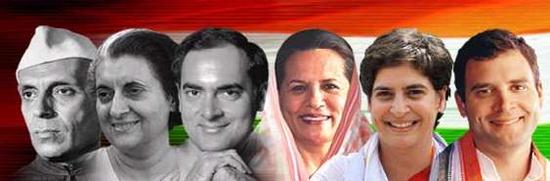
    And you would have heard cries, particularly in the English media not to politicize this issue. But this _is_ a political issue. An unsaid rule of a democracy is that citizen voluntarily give up their right to use force to the government with the guarantee that the government will protect the citizen against others who inflict unjust violence, and will use force legally, in correct measure and only as a last resort. What we are seeing under the UPA (particularly UPA-2) is the opposite: protection of guilty, indiscriminate and disproportional use of force against innocent civilians, and complete forgiveness for those who break the law, particularly when they are related to or minions of the first UPA family. In short, the UPA, given its Italian influence, is leading the mafiazation of the country. If this isn’t politics, what is it? 

    Finally, I want to tackle the notion that somehow women understand this issue better than men. Something like the theory that you need to be a Dalit to understand the pangs of the dalits. Of course, there are women who do, and I will not deny that. But look at the response of the some important women in the country, and you’ll realize that not all women are equally outraged by these incidents. For instance, in this case, the Sphinx maintained her enigma until forced by public pressure, a Delhi woman officer commended police action and the Delhi CM shed politically correct tears, but allowed the cops to beat up women protesters. In an earlier case the Notional (oops, National) Commission of Women wore makeup, outed the victim with no regard to her privacy, and issued toothless statements against crime. Even the leader of the opposition, Sushma Swaraj, showed her ‘traditional values’ by proclaiming the victim to be living dead! And of course, all of them have their difficulties, particularly the NCW which has no legal teeth. But why didn’t the chairperson join the protest and ask for legal teeth? Why didn’t Sushma Swaraj, or Sonia Gandhi come out and say that they would relinquish half their 36 Z+ security guards to protect the public? Why were the CM, the PM and the Sphinx silent when innocent citizens were brutalized by the police?

    Well, to harp on the point, it is political again. It is because we the middle class don’t matter politically. It is because despite all the abuses, we the middle class don’t vote in large numbers. And it is because we are not a vote bank for justice, peace and prosperity.

    Perhaps it is time this changed.

    Friday, December 07, 2012

    Privatizing public responsibility

    One problem with specialists in a field, particularly a theoretical one is that they get entrapped in dogma. Now, the naive are also victims of dogma (ex: Apple buyers), but they do not command the language or terminology of a field to convince others of their beliefs. Specialist dogma, on the other hand is more threatening, because specialists can summon both language and superficially correct evidence to support their dogma which may convince non-specialists to follow their lead.

    The dogma of the UPA government starts with the assumption that the public sector cannot be fixed (or won’t be fixed) and that the private sector is the ONLY efficient source of delivery of all services. The inevitable conclusion from this is to outsource all government functions to private parties.

    They did it with 2G, by outsourcing decision making to an individual and with coal, outsourcing it to a committee of individuals with private vested interests. Unfortunately, successful outsourcing means outsourcing non-essential functions and not your core competency, and the UPA is out to remake the government into a defunct body of fat cats riding in red light cars. (Clay Christensen has a different opinion on core and non-core functions here, but I’ll stick with dogma!)

    This trend started with the RTE act. With an interesting twist of language, the government hoisted the responsibility of protecting the Right to education on the private schools. The consequences of this and the subsequent approval by the Supreme Court of the act mean that governments now have no incentive to improve public schools. Anyone who asks for quality education will be directed to beg at the nearby private school. Never mind that outside the big cities, private schools are in much worse shape than their government counterparts. Never mind that this opens up new avenues of corruption for government servants. Never mind that this will lead to a huge influx of people into the major cities simply looking for a better education for their children.

    Further evidence comes in the form of FDI in retail. Whatever be the merits or demerits of the policy, a much-publicised reason for opening up retail for FDI is that the Walmarts of the world will create cold chains in India and reduce agricultural wastage. Now, I was thinking, Walmarts will be allowed in 53 cities in India, so how many cold chains will they need to create? 10, 20, 50? In contrast, the Food Corporation has 69,474.96 godowns (Page 42) with an income of 74,711 crores (roughly 15 billion USD). Not to mention, the 5300 cold chains already in operation in the private and public sectors. Now, I don’t know how much it costs to build a cold chain, but surely it would cost less than 15 billion USD to upgrade FCI godowns to cold chains? Again, observe the underlying dogma. (On an aside, I got these stats within 3 minutes - why can’t the media find stats like these and ask the right questions instead of simply thrusting mikes in suited faces?)

    The latest in this is the cash transfer program. As recognized by dozens of committees and mentioned in hundreds of reports, the problem in government is the delivery mechanism, not what is being delivered. So, how can a system that can’t deliver grains deliver cash? Why wouldn’t the leakages that persist in delivering goods not remain in delivering cash? How will the system prevent the drunken husband from beating his wife and drowning all the cash in drink?

    Unfortunately, for those who run the country, such questions are not worth answering.

    Sunday, November 25, 2012

    More freedom…

    In 2007, I wrote a post entitled “Unit of Freedom” that described India as a mobocracy. Ever since there has been accumulating evidence of the same, the latest being the arrest of two girls, one for posting an innocuous comment on facebook, and the other, for liking it.

    What is most tragic however, is that the judge actually allowed the charges under section 295A and under 64 A of the IT act  to stick, and only released the girls on a bail of Rs. 15,000. He did not consider the manner of the arrest, the innocuous nature of the complaint or the motives of the complainant, and instead applied the ‘law’ like a robot.

    With protecters of the law like this judge and the Maharashtra police, no wonder people have to turn to Thackerays for protection.

    Namma alateyannu…

    There is a famous essay by Dr. Kota Shivaram Karanth titled “Namma alateyannu meeralarada devaru” which, loosely translated means “The god who cannot exceed our limitations”. Dr. Karanth, a quintessential rationalist explains the origins of God in our minds – how the magnificence of the god who created the universe* is entrapped in the puny imagination of humans.

    I read (well, was supposed to read, but skimmed) the essay in my I PUC Kannada text book and I’m unable to locate it now. However, I remember the summary of the essay very well – that God is essentially a creation of the “puja” establishment, and therefore, he does not exceed human limitations.

    You ask, why bring this up now? Well, I reached a tipping point in my antipathy towards organized religion on a recent trip to Kukke Subramanya and I was trying to find that article so that I could write this blog!+

    Have you wondered how similar the god of an organized religion is to a King of the ancient times ? Kings are all powerful in their realms and have the power of life and death over their people. Kings have huge egos and need frequent displays of obsequiousness to satiate them. They take offence easily and frequently run campaigns of terror against their offenders. And nothing offends them more than praising another king. Kings offer protection for *their* people, and only until the protected acknowledge the protection and are (publicly) grateful for it. Access to kings and favours dispensed by them are mediated by agents beholden to the king. Replace kings with God and agents by priests, and what do you have? organized religion!

    And while we are at it, I (naively) hope the overzealous internet police of India do not see this post and haul me off for arrest, but instead focus on tackling real security issues like the violence committed by Shiv Sena activists in Mumbai.

    * I am not saying that a God created the universe, nor am I refuting current physics which believes that the sum of the energy and mass in the universe is zero, which is a convenient place for a self-starting universe. I’m merely stating scripture.

    + On an aside, I am terribly disappointed by the lack of Kannada literature, particularly classic Kannada literature on the web. Is the Ka Sa Pa listening?

    Monday, September 10, 2012

    A f’cking crazy country

    Going by the recent controversies over cartoons in India, one might think that the Lashkar is misguided in training armed militia to fight against the country. After all, if a cartoonist can be so dangerous that he is charged under the same section as Ajmal Kasab, all the Lashkar has to do is train sufficient militants in cartooning skills and it can take over the country!

    Goddamn f’cking state.

    But what pisses me off is how stupid the judge should be to admit the charge instead of throwing it out and charging the cops with unlawful arrest. Or how stupid one of our national icons Mr. Narayana Murthy is, that he is proud of Mania’s+ record in protecting free speech!? Or how stupid is the compere on a national channel who cannot differentiate between a charge of sedition and the decision of the National Broadcasting Association not to show the offending cartoons?

    God save this country. But no, he cannot either. Just an express train ride on the way to total doom. Folks, if you have a chance, get out of his hell hole while you still can.

    ----------------------------------------------------------------
    +Mania = Ma(n Mohan) + (So)nia

    Monday, September 03, 2012

    The caste system of the communists and the JNU-types

    What? How can the doyens of equality propound a divisive belief like the caste system, you ask.

    Here’s how:

    The following are the untouchables: the BJP, right-wing parties, America (except when it is bankrolling their projects), the rich, the Hindus, logical thinkers,  and self-made entrepreneurs. All contact is to be avoided with this lot, under any circumstances. The untouchables never do anything right. They always try to exploit the gullible upper classes. In fact, if the JNU-types had their way, the untouchables would be gulag-ed, their properties seized and the constituents sent for hard labour in West Bengal (Editor: now that West Bengal is ruled by another dictator, read the last phrase as your favourite (or least favourite) form of inhuman punishment.)

    The Shudras: the Congress party, handout-dependent industrialists, the ‘poor’, and the lower-middle class. They are to be despised most of the time, but are to be exempted when the alternative favours the untouchables. A few handouts, some lip-service and relentless verbal abuse of the untouchables keep the Shudras happy with their lot.

    The Vaishyas: All those who finance these worthies: Russia and China in the past, evangelical organizations, and international communist organizations. While money is to be despised in general, that too vociferously and in public, money that comes from these sources comes blessed for use in private. And the Vaishyas are preferable to the Shudras – misdeeds of the former against the latter are to be supported at best, and ignored at worst, to preserve the hierarchy of the system. Think how our communists are silent about how China disenfranchises poor people of its lands without due process.

    The Kshatriyas: Naxals, Bodos, Maoists, and other violent wings of extremist leftism. The Kshatriyas not only commit the violence that the JNU-types secretly admire, but they can also turn against the JNU types when angered – so they not only command respect, but also demand (and get) it. Atrocities committed by this group against any group lower in the hierarchy must be supported, encouraged and glorified. They are to be supported at all costs except when the interests of the Brahmins are in danger, which brings us to

    The Brahmins: As members of the uppermost caste, constituents of the JNU Brahmin caste are beyond all reproach. They include the JNU-types themselves, hardcore communists, and most importantly, Muslim fundamentalists. Nothing shall be said that criticizes actions of members of this caste, they are always clean and always closest to the god of the godless. So, Bodo violence against Muslims should be condemned while the violence committed and threat of violence issued by Muslim fundamentalists against innocents, most of who are poor and middle-class shall be condoned.

    Have I missed any important constituents? Enlighten me with your comments!

    Sunday, August 12, 2012

    Nantu adu heegoo untu

    I’m not a big fan of plays and I generally keep my distance from Kannada plays in particular. However, my wife pestered me sufficiently to attend a play with her at RangaShankara – Nantu adu heegoo unte?

    Directed by Bhargavi Narayan, the play is a funny take on the travails of marriage. Sheela and Shankar, a couple married for many years are separated and close to finalizing their divorce. Shankar also has a new fiance, Seema, a flirtatious, shopaholic daughter of a real-estate baron, who is many years younger than him. Shankar is a director who hasn’t met with much success because he refuses to appeal to the mass market of television serials. Vinay, their mutual friend and Shankar’s accountant invites Sheela to Shankar’s house to resolve tax issues. Thrown into the mix is Shankar’s friend and former cricketer Shamir, a playboy and wannabe actor.

    What happens in the melee? Bhargavi Narayan directs a gripping and funny play that illustrates some of the common mistakes couples make in a marriage – lack of communication, lack of appreciation, and couples not investing time in their relationships.

    Watch it. It is one hundred rupees (and more importantly, one and half hours) well spent.

    Wednesday, April 11, 2012

    Why driving in Bangalore is like war

    I’ve been driving a car in Bangalore for six years now and have been at the receiving end of horrible drivers throughout. Why, I wondered do people thrust and parry on the roads!? And the answer struck me just yesterday; it is because driving in Bangalore is like war.

    Here’s why:

    First, the fight for every inch of space. Not unlike armies, drivers in Bangalore know the value of every inch of ground. And they are willing to risk life and limb for it. The auto driver who squeezes his handlebar in the small gap between your rear-view mirror (the left one!) and the electric pole; the two-wheeler rider who jumps on the footpath at the first sign of a traffic slowdown; the taxi driver who tries to climb over the median to avoid the U turn he should take; and by god, even the cow that lazes past a hundred mad honkers!

    Next, might is right. In war, the stronger army makes the rules. On Bangalore roads, that privilege goes to none other than the mightly Volvo bus. Clad in red colors, Volvo buses move with the flourish of a Gulliver in a Lilliput china shop. Get close and you are squashed, they warn with just their colors. Incidentally, Volvos prove an old adage about India and Indians: Give an Indian even the least bit of power, and he/she is bound to abuse it. Examples abound, but I digress.

    Let me get back to my theme. An important aspect of fighting any war is filibustering. Which is why country after country develops fancy ICBMs and nuclear weapons; the threat of massive action keeps  misguided adventurers at bay. However, the opponent must be assured that you will follow up your bluster with bombs. Bangalore roads are no different. The weapon of choice (after sheer bulk) is the horn. The louder and shriller the honk, the stronger is the threat of action; but it needs to be followed up by a quick thrust to the point of choice. Any delay convinces your opponent that you are all horn and no thrust leading him or her to ignore your filibuster. Which brings us to

    Sizing up your enemy. Pakistan, for instance knows that despite all posturing, India does not have the guts to invade it. Similarly, auto drivers know that a BMW is not going to challenge them over a spot in the lane. Scorpios know that autos wouldn't challenge them, and Volvos know that no vehicle will challenge them. Sizing up your enemy quickly is key to success on Bangalore roads.

    Bangalore drivers also follow another tenet of war: hitting your enemy at his weakest with your strongest weapon. Think of a two wheeler who overtakes your car from the blind spot. Or a truck that comes barreling down the wrong side of the road at high speed, or a bullock cart who takes up all the space on the road with its bulk, forcing you to get on the wrong side of the road to get ahead. Sun Tzu could take a lesson on the Art of War from our drivers!

    Finally, like in war, both victors and victims lose. Both victors and victims end up with high blood pressure, mental fatigue and loss of useful brain bandwidth. The joy of having snatched a square inch of space from one opponent is killed by the threat of the next opponent who is upon you before you can even think of your victory! However, as in, families are relieved to have you back. That alone is a saving grace of the disgrace that we call roads.


    Thursday, October 13, 2011

    RCB Demolished

    For a while now, I’ve been pestering my nephews to put their cricketing thoughts on (virtual) paper. I was finally able to corral my younger nephew and get him to write this post.

    The Champions League T20 finals RCB VS MI was approached by all with a lot of pomp and hype. Here we were with two sides: the first, a weakened side without its captain and other stars which had made it to the finals fighting all through; the second, sailing through to the finals  chasing 200+ scores on consecutive occasions. Who did you expect would win? A MI team without Sachin Tendulkar or a in-form RCB side with Chris Gayle and Virat Kohli going really strong? I  thought RCB…but RCB didn’t win, did it? Why ?? Below are the reasons:

    1. Overconfidence,  having chased down 200 and more on two occasions against better bowling attacks.

    2. Maniac team selection by Dr. Vijay Mallya who choose to pay 7.5 crores for a lad who hasn’t even played 50 games for his country but wasn’t willing to pay 5.5 crores for the world’s greatest all-rounder who had performed brilliantly in the previous seasons.

    3.Lack of quality cricketers: Being a professional cricketer who plays 5th division for Swastik Union, it disappoints me that I know batsmen who are only 16 and 17 who have greater talent and technique than Saurabh Tiwary and Mohd Kaif. Kaif’s  batting grip locks the wrist which disables the best shots such as the drives.  Saurabh Tiwary didn’t know he had to get onto the front foot to block a yorker. Further, any cricketer worth his name knows that the safest and the best way to score fast runs is by playing straight, i.e. in the “V”.  Chris Gayle and Virat kohli are exponents of playing straight, something that should’ve been a lesson in the nets for Tiwary and Kaif, amongst others. Effectively, RCB went into an international tournament fielding a side without a technically sound middle order!

    4. To be able to slog a spinner more often than not you have to get onto the front foot to  hit him with ease. One is expected to take his left foot as sensibly close as possible to the pitch of the ball in order to gain balance, power, and control over the shot. Sadly, Mayank Agarwal got out twice trying to slog a spinner with his feet pointing in exactly the opposite direction of the pitch of the ball.

    5. Lack of match practice: On most occasions, the middle order and the lower middle order hardly got to bat as Gayle and Kohli were splendid; therefore  the already useless middle order of RCB lacked the match practice as well. The complacent RCBians  didn’t play practice games so that they could strike some sort of form. Net Practice can never be a substitute for match practice.

    6. Bad Captaincy : After Virat, Gayle and Dilshan, the most accomplished batsman in the team is Vettori himself. The moment Gayle and Dilshan were out, Vettori himself should have come out to bat, as on any day he is a proven better batsman than the Tiwarys of the side.

    The above reasons contributed to the miserable failure of RCB in the CLT 20 finals. I hope they wont be repeated and will play better cricket in the near future.

    Sunday, September 04, 2011

    Soothsaying and the Congress party

    If recent events have shown something, it is that the Congress party is a soothsayer’s dream subject. If you want to know what the party’s response will be to any situation, you only need to go back in time a few decades and you’ll get the answer.

    Let me explain. In 1977, the Congress party was out of power and the Janata party came into power. But they squabbled amongst themselves, and what did Indira Gandhi do? She encouraged Charan Singh to split away, supported him for a while, and then pulled the rug under his feet, which led to elections. Now move the clock to 1989. Rajiv Gandhi lost power, VP Singh and Chandrashekhar squabbled, and Rajiv Gandhi encouraged Chandrashekar to split, supported his government for a few months, and then withdrew support. And the same repeated in 1996.

    Similarly, when faced with an upsurge of public antagonism, Indira Gandhi’s first response was to invoke the “Foreign Hand”. Rajiv Gandhi talked about vicious forces that were out to destabilize India when the Bofors scam hit. And today, Rashid Alvi accused a foreign hand (of course, those in the know, know that it is an Italian one) of trying to destabilize India. Indira Gandhi imposed the emergency and foisted all kinds of cases on the opposition; and while the India of 1985-86 wouldn’t let Rajiv Gandhi impose the emergency, he tried his best to muzzle the media by introducing the “defamation bill”. Lo and behold, today we have the “Group of Morons” who are trying to bring in a bill to regulate the media. (Maybe they’ll serve a privilege notice against me as well?)

    And while the faces of the henchmen, the a**lickers and the hangers on have changed, their attitudes and languages haven’t changed one bit. See the abuses showered on team Anna if you want proof.

    What I’m trying to outline is that despite its dubious claims of having introduced the green revolution, the IT revolution and globalization in India, the Congress party remains a party stuck in the discourse of the 70s. What is further shameful is that the great white hope of the party doesn’t have a single original thought to offer and his family friends (what a TV channel calls ‘Young Turks’) are no better either.

    There is no future for the country as long as the Congress is in power. Sadly there is no viable alternative in sight.

    (Postscript: To my regular readers: thank you for your enquiries, and I promise I’ll post more regularly in the coming weeks. )

    Sunday, April 24, 2011

    More on freedom

    If my blog were to stand for a single topic, that topic would be "Freedom". I've blogged earlier about the futility of banning skirts, jeans, music, books and so on. Over time, the bans have become more and more ridiculous - women entering a bar, or teachers being forced to wear sarees and so on. But some recent events take the cake.

    For instance, Christ College (now Christ University) in Bangalore has banned a chocolate stick. Mahavir Jain college has banned male and female students from using the same set of stairs. Another college has banned standing on campus. What's hilarious is the twisted reasons one hears on why these bans are justified - the staircase ban is ostensibly because the girls' toilet is on the right side of the building and the boys' toilet on the left. Now one wonders - do students climb stairs only to go to the toilets? Or is it the college administration whose heads are in the toilet?

    And we have more. The World Badminton Federation has banned women from wearing anything but mini-skirts on the court, ostensibly to popularize the sport. Don't worry about all those women who might be discouraged for the same reason! They can all go and take up knitting.

    At least the WBF is honest about why they are doing it, unlike the worthies in Bangalore colleges.

    Losers, all.